Don’t Feed the Monster
Understanding negative self-talk and learning to quiet your inner voice
We all have that little voice inside our head that chats away, it is often refereed to as Self Talk.
Self-talk isn’t always negative.
In fact, the way we talk to ourselves can be encouraging, supportive and even celebratory.
It can also serve a useful purpose, helping to keep us safe, reminding us to do things, preparing us for situations and alerting us when something might need our attention.
It might sound like,
“I can do this,” “I’m proud of myself,” “I handled that really well,”or“Don’t forget your keys!
This positive chatter can help us build confidence, recognise our achievements and keep going when something feels difficult, it can be a helpful guide.
The problem comes when our self talk becomes overcritical, judgemental or unkind. Instead of recognising what we have done well, we focus on our mistakes, shortcomings and perceived failures.
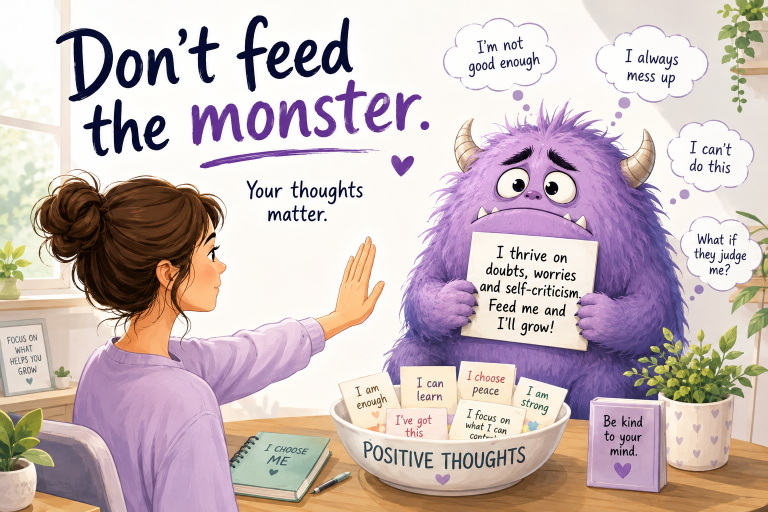
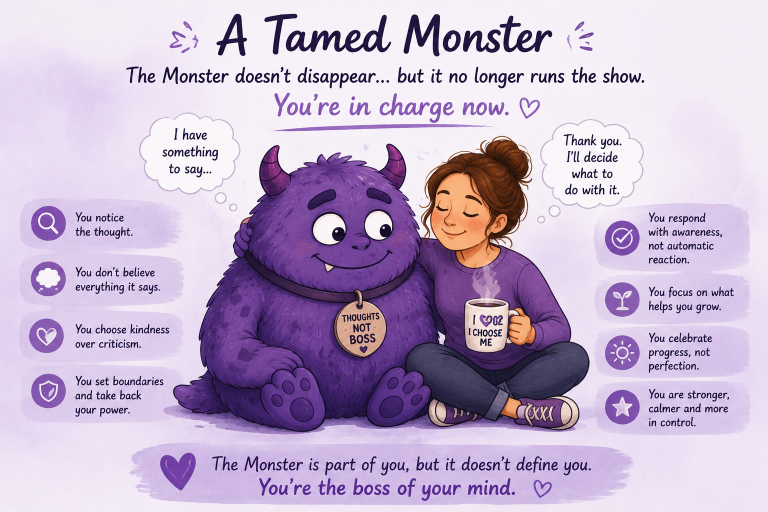
Think of the negative voice as a little monster that feeds on our attention.
The more we listen to it, believe it and repeat what it tells us, the bigger and louder it can become.
It might start with one small thought, but before long, that thought can influence how we feel, what we do and how we see ourselves.
And because this inner conversation happens so often, we may not even notice that we’re doing it
The aim isn’t to get rid of every negative thought, we all have them.
It’s about becoming more aware of which thoughts we’re giving our attention to, and learning not to continually feed the ones that bring us down.
If negative self talk is so debilitating, then why do it?
There isn’t one single reason we engage in negative self-talk.
Often, it develops from a mixture of our experiences, habits, beliefs and the way our brain tries to protect us.
It must be noted that Monster isn’t the same thing as having a negative thought.
We all have those.
The Monster grows when we repeatedly feed, believe and give power to those thoughts.
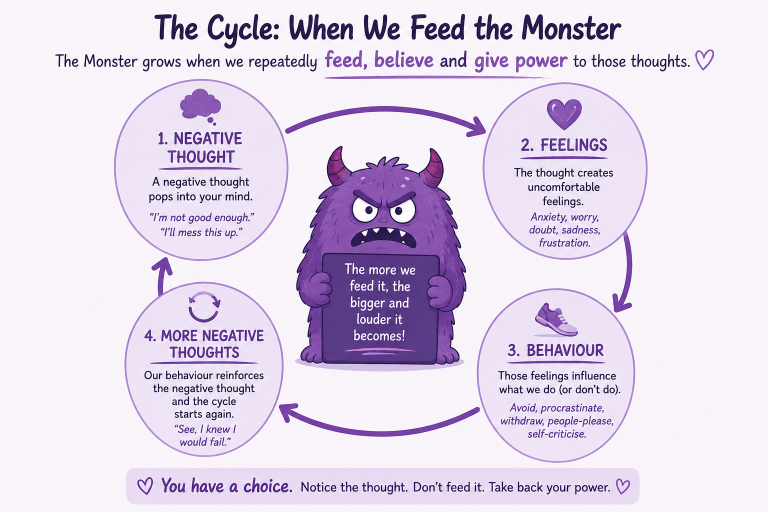
The first step is to notice it.
Negative self-talk can become so automatic that we don’t even realise we’re doing it. We might suddenly notice that we’ve been telling ourselves, “I’m useless,” “I’ll never manage this,” “I am not good enough” or “I’ve messed everything up” without ever stopping to question it.
Once we notice the thought, we can create a little space between having the thought and believing the thought.
You may begin to recognise these unhelpful thinking patterns that keep the Monster fed – such as Catastrophising, Mind-reading (assuming that you know what someone else is thinking), all or nothing thinking, always focusing on what went wrong.
Being a little kinder to ourselves.
This doesn’t mean forcing positive thoughts or pretending everything is fantastic, it means begin to develop a more realistic and supportive inner voice.
Instead of:
“I always get things wrong.”
You could say:
“I got this wrong, but everyone makes mistakes. What can I learn from it?”
As the negative thought pops into your head. Take a moment. Pause.
You don’t have to fight it, get rid of it or believe it.
You can simply notice it and decide:
That’s when the Monster begins to loose it power.
This takes practice, because your automatic way of thinking may have been ingrained for years, but stick to it.
The new automatic thinking pattern will become a positive one.
“If you change the way you look at things, the things you look at change.” – Wayne Dyer